OSHA has extended the date by which certain employers must electronically report injury and illness data through the Injury Tracking Application from December 1, 2017, to December 15, 2017. Read More
OSHA’s 2017 Top Ten List
OSHA recently announced its top 10 most cited violations for fiscal year ending 2017. Although the order may change from year to year, it usually reflects the usual suspects of violations and this year’s list is no different. Because the top ten list is so consistent, it remains an excellent starting point for businesses that want to review safety practices and policies and may not be sure where to start. It can also serve as a helpful tool for safety committees to periodically review along with the OSHA logs. The top ten list appears below with some common examples of each violation. Read More
An Often Overlooked Tool in Workplace Safety Prevention: The Near-Miss Investigation
 OSHA defines a “near miss” as an incident in which no property was damaged and no personal injury was sustained, but where, given a slight shift in time or position, damage or injury easily could have occurred. Put simply, someone got lucky.
Because there was no damage, these near miss incidents are often ignored or not investigated as thoroughly as a recordable workplace injury or illness on the premise of “no harm, no foul.” However, by doing so, businesses fail to take advantage of a zero cost learning tool that might prevent a serious injury or illness from occurring in the not-so distant future. Indeed, experience has shown there is little question that most loss producing events were preceded by warnings or near miss incidents.
Take the real life example of a business that many years ago installed a number of small venting systems at its operations. A piece of one of the venting systems fell and almost hit an employee which almost certainly would have caused a serious injury and possibly death. The business determined that (essentially) a screw came loose causing the part to fall. It then checked the remaining venting systems and learned that other screws had starting becoming loose as well and was able to resolve the issue before anyone got hurt. Read More
The Importance of Reporting Workplace Injuries
 There are some OSHA lessons to be learned and things to think about from the recent Third Department case in Silvestri v. New York City Transit Authority, 2017 N.Y Slip Op 06123 (August 10, 2017). In Silvestri, the Third Department affirmed a decision by the Workers’ Compensation Board that the widow of a deceased employee working at the Transit Authority was entitled to benefits because there was substantial evidence that the decedent’s injuries and ensuing death were attributable to an accident that arose out of and in the course of his employment.
The problem was that there were no witnesses to the accident and the employee did not report it. Instead, he went home and told his wife that he had fallen off a ladder and into the “pit” at work. The decedent went to the hospital and was diagnosed with fractured ribs, was given painkillers and sent home. Three days later he went back to the hospital and was diagnosed with a ruptured spleen and a punctured lung and was admitted but died the next day following complications from “blunt impact injuries.”
The court found that testimony of a supervisor that he had witnessed the decedent holding his stomach and indicating that he was not feeling well the day after the accident combined with the declarations of the deceased employee to his wife concerning the accident presented sufficient evidence that the accident occurred in the course of employment. Read More
OSHA to Hold Second Public Meeting to Discuss Voluntary Protection Programs
As generally expected under a Republican administration, OSHA appears more focused on compliance and a collaborative working relationship with businesses. As part of this strategy, OSHA recently announced it will hold its second public meeting on August 28, 2017 to solicit suggestions for strengthening the Voluntary Protection Programs (VVP).
The agenda will target three broad categories which include 1) overall VVP process and flow; 2) corporate/long-term participant involvement; and 3) special government employee activities. The meeting will be held in the Great Hall B of the Ernest N. Morial Convention Center in New Orleans from 1 to 4 p.m. A link to register follows https://reg.abcsignup.com/reg/event_page.aspx?ek=0019-0016-b6d21cbf3980471ea6e0bf2b391faacb
However, it is also worth noting that the numbers do not indicate any material slip in enforcement. OSHA inspections have remained relatively constant during the first six months of the Trump administration, as approximately 17,500 inspections occurred from January 20 to July 20, 2017, compared to approximately 16,500 inspections that happened during the same period in 2016. It will be interesting to see if the rate of inspections continues in the coming years and to watch for any significant policy shifts such as in the area of bathroom facilities for transgender workers, among others.
James Sullivan Confirmed by Senate
 Cozen O’Connor member James Sullivan was confirmed by the full Senate yesterday to fill the last vacancy on the Occupational Safety and Health Review Commission (“OSHRC”). OSHRC, an independent federal agency providing administrative trial and appellate review, was created to decide contests of citations or penalties resulting from OSHA inspections. OSHRC functions as a two-tiered administrative court with established procedures for (1) conducting hearings, receiving evidence and rendering decisions by its Administrative Law Judges and (2) discretionary review of ALJ decisions.
Jim’s start date with OSHRC has not yet been determined. Jim will be very much missed but we wish him every success as he starts a new and exciting chapter in his professional career! Congratulations Jim!
OSHA’S Electronic Recordkeeping Web Portal to be Available on August 1, 2017
As part of OSHA’s new electronic recordkeeping rule previously discussed in prior blogs, certain employers will be required to electronically submit required injury and illness data from their 2016 Form 300A. OSHA believes that from a human behavior and motivation perspective, making such information publically available will “nudge” employers to focus on safety and by improving the accuracy of the data employee retaliation concerns may be diminished.
OSHA has stated that the web portal is now scheduled to go live on August 1, 2017 and will be accessible here: https://www.osha.gov/injuryreporting/index.html
The webpage also includes information on reporting requirements, a list of frequently asked questions and a link to request assistance with a fillable form. Read More
OSHA Proposes Delay of the Electronic Recordkeeping Rule
As expected, OSHA proposed today to extend the compliance deadline from July 1, 2017 to December 1, 2017 for submission of electronic records under its new recordkeeping rule. This is not surprising as OSHA has yet to make the portal available to the public.
Public comments on the proposed extension may be submitted electronically at www.regulations.gov by July 13, 2017 which, of course, is past the current compliance deadline.
As a reminder, OSHA has stated that it will provide a secure website that offers three options for data submission. First, users will be able to manually enter data into a web form. Second, users will be able to upload a CSV file to process single or multiple establishments at the same time. Last, users of automated recordkeeping systems will have the ability to transmit data electronically via an API (application programming interface).
We will keep an eye on further developments but it’s probably a safe bet that regardless of the public comments received, the compliance date will be pushed back.
When the Summer Wind Comes Blowing In: Remember OSHA’s Heat Stress Guidance
 Yesterday, American Airlines announced it cancelled approximately 45 regional flights due to intense summer heat in the Phoenix area and there were record highs recorded in the region. The intense heat waves serves as a good reminder that OSHA has guidance on addressing heat stress and employers may need to do more than simply offering employees a cold beverage or an extra rest period although certainly water, rest, and shade are some ways to prevent heat stress illnesses according to OSHA. In fact, OSHA launched a Heat Illness Prevention campaign in 2011 designed to educate employers and employees on the dangers of working in the heat and the phrase “water, rest, and shade” is OSHA’s tag line for the campaign.
According to OSHA, dozens of workers die and thousands more become ill while working in extreme heat or humid conditions. OSHA further states that approximately 40 percent of heat-related work deaths occur in the construction industry but that employees in any industry could be affected and without regard to age or physical condition. Heat stroke is the most serious heat illness but other illnesses may include heat exhaustion, heat cramps, and heat rash.
Although there is no specific standard, OSHA has cited employers for failing to abate recognized heat hazards under the general duty clause. According to OSHA, a Heat Illness Prevention Program should contain the following key elements:
- Person designated to Oversee the Program
- Hazard identification
- Water, Rest, Shade Message
- Acclimatization
- Modified Work Schedules
- Training
- Monitoring for Signs and Symptoms
- Emergency Planning and Response
OSHA and Ergonomics: The Past, Present, and Future
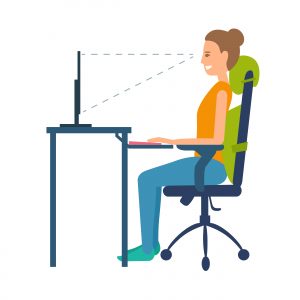 Ergonomics is the study of work. From an OSHA perspective, it is the process of designing the job to fit the employee, rather than forcing the employee’s body to fit the job. This process may include modifying tasks, the work environment, and equipment to meet the specific needs of an employee to alleviate physical stress on the body and eliminate potentially disabling work related musculoskeletal disorders (“MSDs”). The overall goal is to eliminate injuries and disorders associated with the overuse of soft tissues, e.g., muscles or tendons, awkward posture, and repeated tasks. Such common injuries include carpal tunnel syndrome, tendinitis, and other sprains and strains.
As some may recall, ergonomics was a very hot topic for OSHA in the 1990s. In 2000, OSHA, which had spent a decade studying ergonomics, estimated that $1 of every $3 spent on workers’ compensation stems from ergonomic issues and that the direct costs attributable to MSDs were $15 to $20 billion a year, with total annual costs upwards of $54 billion.
OSHA began an ergonomics rule-making process in 1992 and started drafting an ergonomics standard in 1995, which eventually culminated in the issuance of an Ergonomics Program Standard on November 4, 2000, which became effective on January 16, 2001. The new rule generally contained requirements for most non-construction employers to identify and abate MSDs. Not surprisingly, there was strong criticism by various industry and business groups about the new rule which focused on, among other things, mandatory compliance, cost, and tension with state workers’ compensation laws. Shortly after taking office, President Bush signed Senate Joint Resolution 6 on March 20, 2001, which repealed the new standard. Read More