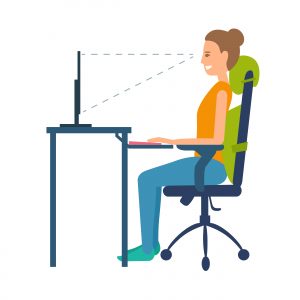
 Ergonomics is the study of work. From an OSHA perspective, it is the process of designing the job to fit the employee, rather than forcing the employee’s body to fit the job. This process may include modifying tasks, the work environment, and equipment to meet the specific needs of an employee to alleviate physical stress on the body and eliminate potentially disabling work related musculoskeletal disorders (“MSDs”). The overall goal is to eliminate injuries and disorders associated with the overuse of soft tissues, e.g., muscles or tendons, awkward posture, and repeated tasks. Such common injuries include carpal tunnel syndrome, tendinitis, and other sprains and strains.
As some may recall, ergonomics was a very hot topic for OSHA in the 1990s. In 2000, OSHA, which had spent a decade studying ergonomics, estimated that $1 of every $3 spent on workers’ compensation stems from ergonomic issues and that the direct costs attributable to MSDs were $15 to $20 billion a year, with total annual costs upwards of $54 billion.
OSHA began an ergonomics rule-making process in 1992 and started drafting an ergonomics standard in 1995, which eventually culminated in the issuance of an Ergonomics Program Standard on November 4, 2000, which became effective on January 16, 2001. The new rule generally contained requirements for most non-construction employers to identify and abate MSDs. Not surprisingly, there was strong criticism by various industry and business groups about the new rule which focused on, among other things, mandatory compliance, cost, and tension with state workers’ compensation laws. Shortly after taking office, President Bush signed Senate Joint Resolution 6 on March 20, 2001, which repealed the new standard. Read More
 On April 6, OSHA announced it has delayed implementation of its new rule for 90 days which, among other things, cuts in half the maximum allowable level of silica dust exposure in the construction industry. The new compliance deadline is now September 23, 2017. OSHA stated that the delay will provide more time to train inspectors and educate contractors and others regarding compliance issues associated with the rule. According to OSHA, approximately 2.3 million workers are exposed to silica in workplaces.
 The ABA – OSHA Committee held its 2017 Midwinter Meeting in Jupiter Florida from March 7 – 10. It was well attended by OSHA practitioners across the country including many prominent government attorneys including: Susan Harthill, Deputy Solicitor for National Operations; Thomas Galassi, Director, Directorate of Enforcement Programs, OSHA; the Honorable Covette Rooney, Chief Judge, U.S. Occupational Safety and Health Review Commission; and Heather MacDougall, Acting Chairperson, Occupational Safety and Health Review Commission.
 The United States Department of Labor announced another proposed delay of the rule entitled, “Occupational Exposure to Beryllium” from March 21 to May 20. Beryllium is a material that can cause lung disease. The proposed delay is intended to give OSHA an opportunity to further review and consider the rule in conformance with a recent White House memorandum which directed the Department of Labor to undertake a review of any new pending regulations and temporarily postpone the date that they would take effect.